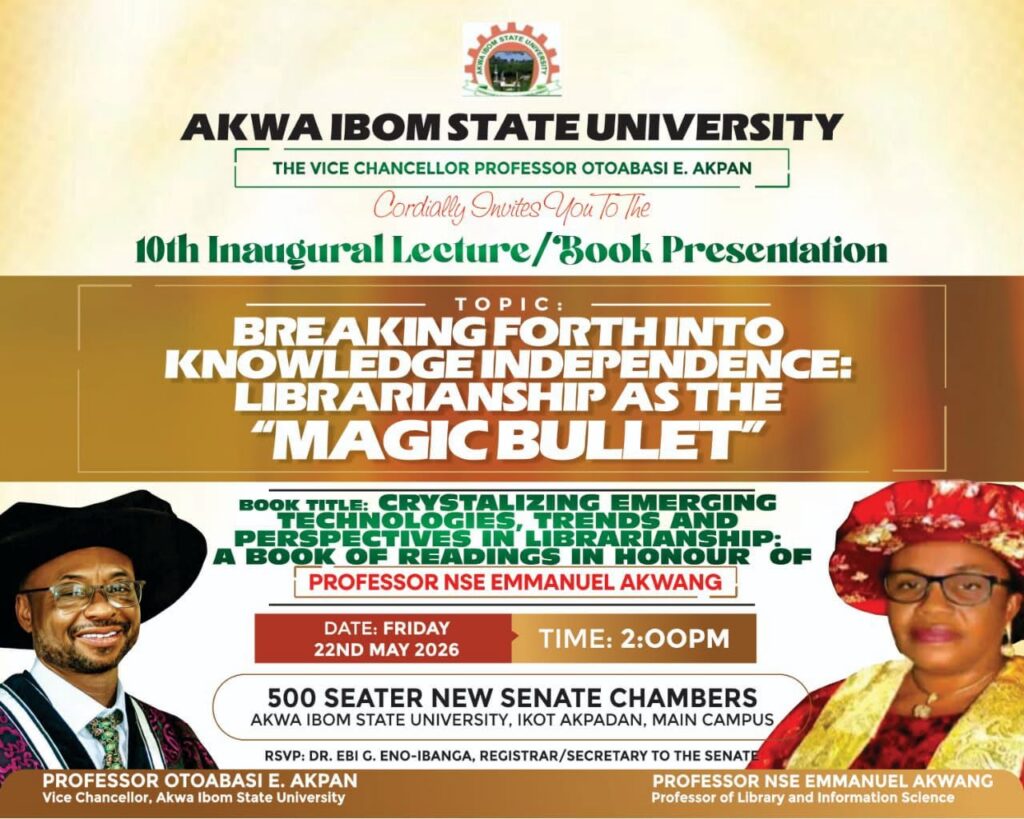
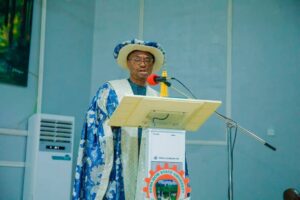
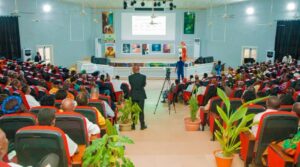
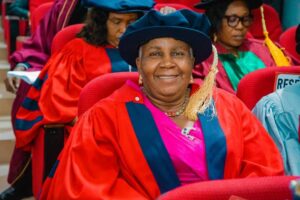
Akwa Ibom State University Don, Prof. Nse E. Akwang has called on the government and educational institutions to properly recognise and encourage librarianship as a viable and strategic profession capable of contributing to national development, by investing more in libraries and information infrastructure to improve access to quality knowledge resources. Prof. Akwang made the call while presenting the 10th Inaugural Lecture on the topic: Breaking Forth Into Knowledge Independence: Librarianship as the Magic Bullet, held at the University Main Campus, Ikot Akpaden, Mkpat Enin Local Government Area, Friday, May 22, 2026.

The Inaugural Lecturer explained that knowledge remains the foundation of human existence, personal growth, innovation, societal transformation and national development, which can be achieved when individuals and nations attain knowledge independence through critical thinking, learning, and informed decision-making. She noted that despite the widespread availability of information through modern technology, societies still struggle with under-development due to overdependence on external knowledge systems. Prof. Akwang said that knowledge independence involves the ability to think critically, learn independently, solve problems and make informed decisions without excessive reliance on others.
The Inaugural Lecturer identified several challenges hindering knowledge independence in Nigeria, including inadequate technological skills, poor research culture, information disorder, weak indigenous knowledge systems and excessive dependence on foreign intellectual products and innovations, adding that knowledge dependence has contributed to social problems such as crime, drug abuse and developmental stagnation.
Prof. Akwang described librarianship as a strategic and service-oriented profession capable of addressing information and educational challenges. In her words “Librarianship is the “magic bullet” for knowledge independence because it operates at the centre of the knowledge value chain through the creation, organisation, preservation, dissemination and utilisation of knowledge.” The lecturer highlighted the enduring relevance of the five laws of library science formulated by the Indian Scholar, S.R. Ranganathan describing them as the foundation of modern librarianship and effective information management, which are: Books are for use; Every reader his or her book; Every book its reader; Save the time of the reader; and The Library is a growing organism. She also addressed some misconceptions about librarianship, stressing that a library is not just a building for books but a hybrid and technology-driven system that gives users access to global knowledge.
Prof. Akwang emphasised that librarianship plays a critical role in promoting access to information, knowledge dissemination, research development, intellectual independence, adding that despite technological advancements and the rise of Artificial Intelligence, libraries and librarians continue to serve as indispensable agents of education, innovation, and social transformation. In order to achieve sustainable development and national self-reliance, the Don, who is a Professor of Information and Library Science, recommended: preserving, documenting and integrating indigenous knowledge systems into educational and research activities; increasing digital literacy and technological training to help individuals effectively utilise modern information resources; organising regular seminars, workshops, and public lectures by academic institutions to encourage knowledge sharing and intellectual development; encouraging students to embrace librarianship and information science as rewarding career paths; adapting to technological changes by libraries while maintaining their traditional role as centres for learning, research and information management; formulating educational policies that reduce excessive dependence on foreign intellectual products, rather encouraging local innovation and creativity; continuous application of the five laws of library science as guide for library operations and information service delivery in modern society.
In his opening remarks, the Vice-Chancellor of Akwa Ibom State University, Prof. OtoAbasi E. Akpan, described Inaugural Lectures as one of the most important academic traditions in the university system as newly confirmed Professors are expected to justify their elevation through scholarly presentations that demonstrate their academic contributions, research achievements and intellectual impact on society.
According to the Vice-Chancellor, Inaugural Lectures provide Professors with an opportunity to publicly showcase years of research, scholarship and professional experience. Prof. Akpan further emphasised the indispensable role of libraries in national development, adding that libraries remain vital institutions for education, research, information dissemination and societal growth despite the rapid advancement of information technology and Artificial Intelligence (AI). He stressed that libraries continue to serve as centres for learning, innovation and intellectual empowerment.
The Vice-Chancellor commended Prof. Nse E. Akwang for the insightful lecture and for clearly explaining the continued relevance of librarianship in the modern digital era. He particularly praised the Inaugural Lecturer’s ability to simplify complex concepts for easy understanding, acknowledged her valuable contributions to academic discourse and knowledge development.
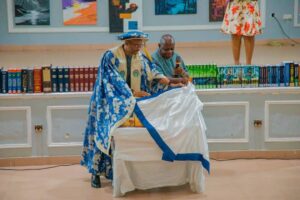
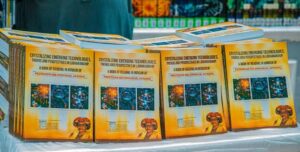
Highlight of the event was the presentation and launching of the book, ‘Crystallising Emerging Technologies, Trends and Perspectives in Librarianship: A Book of Readings in Honour of Professor Nse Emmanuel Akwang’ handled by the Chairman, Board of Trustees, Topfaith Group of Schools, Dr. Emmanuel T. Abraham and the Vice-Chancellor, Akwa Ibom State University, Prof. OtoAbasi E Akpan.

In a vote of thanks, the Registrar Dr. Ebi G. Eno-Ibanga, FNIM, appreciated God Almighty for the success of the event. She expressed gratitude to the Vice-Chancellor for sustaining the Inaugural Lecture series. She lauded Prof. Nse E. Akwang for an illuminating discuss and reaffirming the library as the intellectual heartbeat of the institution. The Registrar acknowledged the Inaugural Lecture Committee for their meticulous planning; the Library Staff for their dedication and hard work in supporting the Inaugural Lecturer; the technical team for ensuring a hitch free and well publicised event. She thanked all the family members and guests for their presence and wished them success in all their endeavours.
Prof. Akwang is currently the University Librarian, Akwa Ibom State University. She obtained her Ph.D in Library and Information Science, with specialisation in Library Management from Abia State University, Uturu, Abia State in 2013; Master in Library and Information Science from the University of Uyo in 2008; and B.A (Ed.) French from the University of Uyo in 2004. She has served as Librarian II; Head of Readers’ Services Division; Head, Processing Division; Librarian I; Head, Obio Akpa Campus Library; Senior Librarian and Associate Professor in the same Institution. Prof. Akwang is a seasoned lecturer, supervisor, external examiner and consultant. She has won several awards; she is a member of professional bodies; she has served as Chairman and member in several committees and has been actively involved in community service. She is blessed with four lovely children and seven grandchildren.
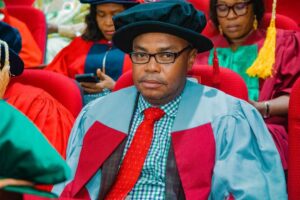
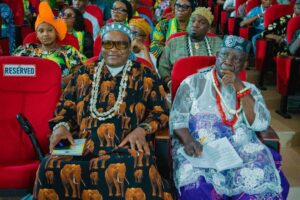
The event was attended by Principal Officers; Professors; Deans; Directors; Heads of Departments; Members of the University Community; Government Officials; Clergy; Traditional Rulers; Family Members of the Lecturer; Invited Guests and well-wishers.


© Directorate of Information
Public Relations and Protocol (DIPR&P)
Office of the Vice-Chancellor
Akwa Ibom State University